
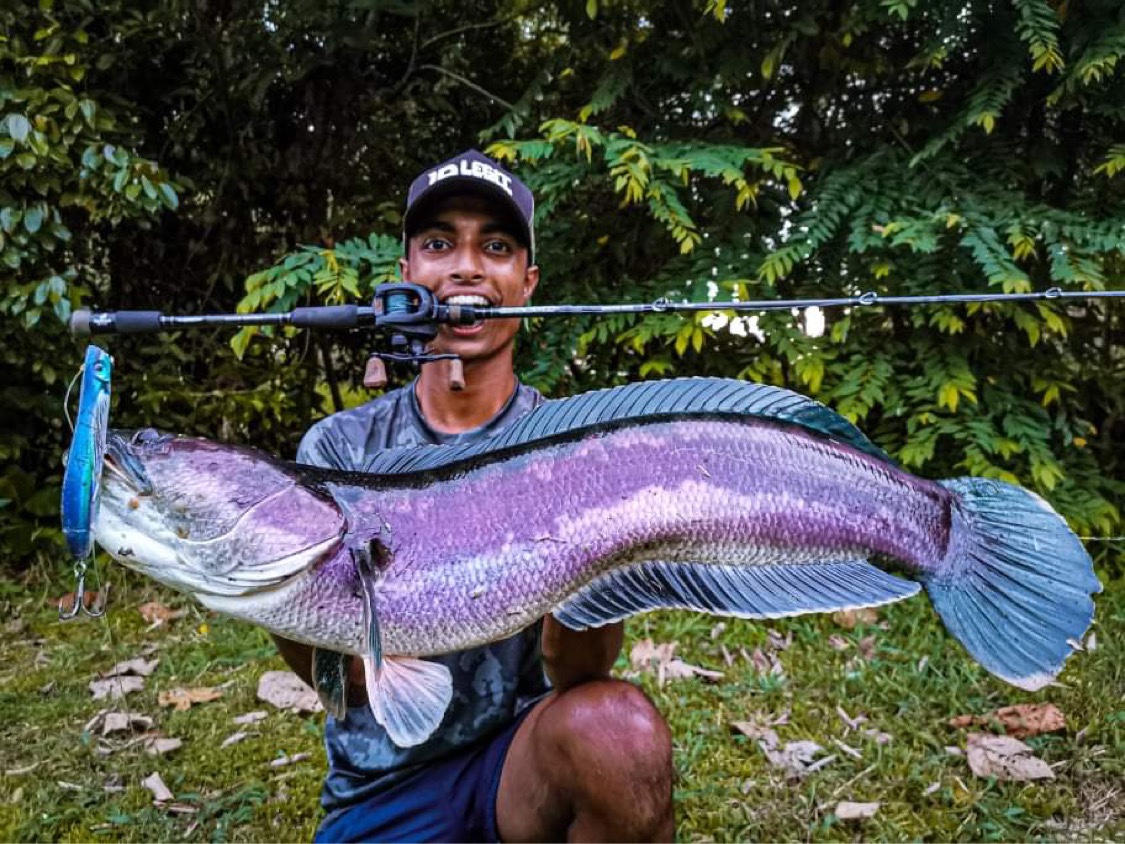
Snakehead Fishing Experiences
(Feat. Jubel Matthew)
By Kane McDermott
Introduction
Almost all species of Snakehead have a controversial history and culture behind them in the United States. Much of the controversy came from the initial prediction of widespread food chain disruption when the species was introduced to North American water systems. This led the state of Florida’s wildlife commission to place a kill-on-sight/upon-catching order to all anglers of the state. However, despite people’s opinions on the order, most anglers seem to love the fight of having a torpedo-shaped freshwater fish on the end of their lines. As time went on Florida removed their kill-on-sight order and as of today the only requirement upon catching one is to either keep it or release it into the same body of water you caught it in.
Locations
Snakeheads are primarily a freshwater fish, but because they have an airbladder that acts as a primitive lung, the species can survive in brackish conditions and even live for days out of the water. In Florida, they can be found in almost any canal in Broward and Dade County. Throughout the rest of America, rivers or small bodies of water sourced from a river are generally great places to start looking.
Species
In the southern region of the United States, the Bullseye Snakehead seems to be the most common, while the Northern Snakehead has dominion along the northeast states. While both species have a reputation for being aggressive, my personal experience is limited to the Bullseye Snakehead. However, I can confirm that they are a very aggressive fish when agitated/instigated for a reaction strike, but it’s also common to see massive snakehead flee the canal banks before you can even spot them (much like the shy common carp).
Note:
These are just the most common species of snakehead to encounter in the United States. There are quite a few different species of snakehead all around the world. My personal favorite (to look at, because I’ve never found one) is Channa Micropeltes, aka the Giant Snakehead.
Catching a Snakehead
In the following sections I will present what I’ve found works best for catching snakeheads based on my own experiences. Additionally, Jubel Matthew was kind enough to share a few words with us and give some insight on his experiences fishing for snakeheads in India.
Author’s Experiences with Bullseye Snakeheads
From my own personal experiences, I find that the Bullseye Snakehead loves hiding along the banks of canals and aren’t afraid to push their way through shallow weeds to get a better hiding spot. With this in mind, I’ve found two effective ways to entice them to strike when in these places.
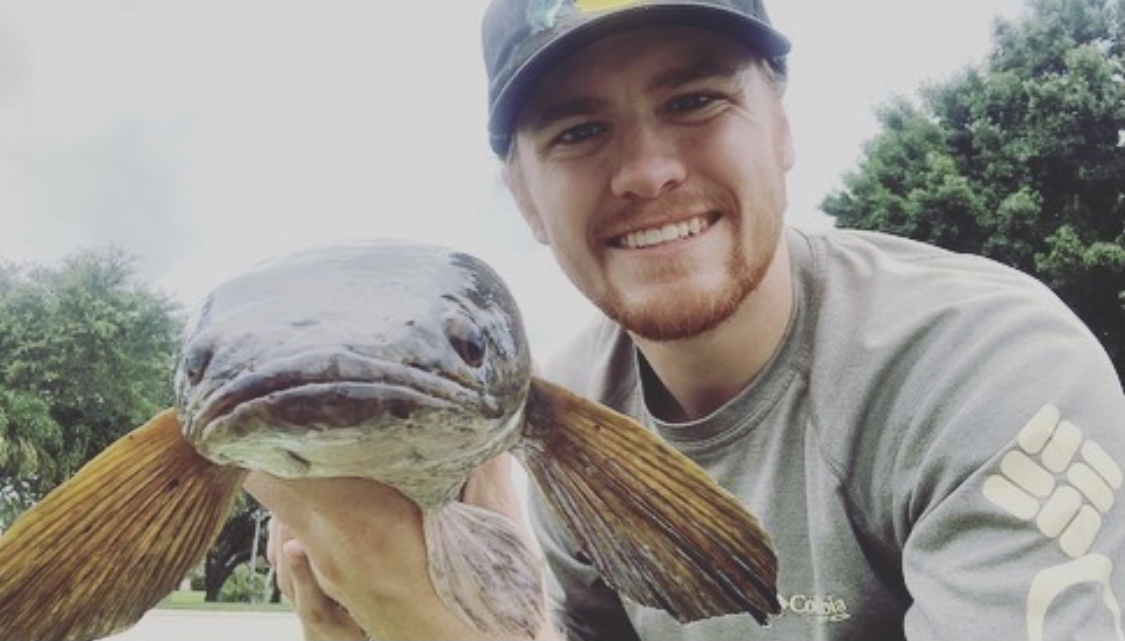
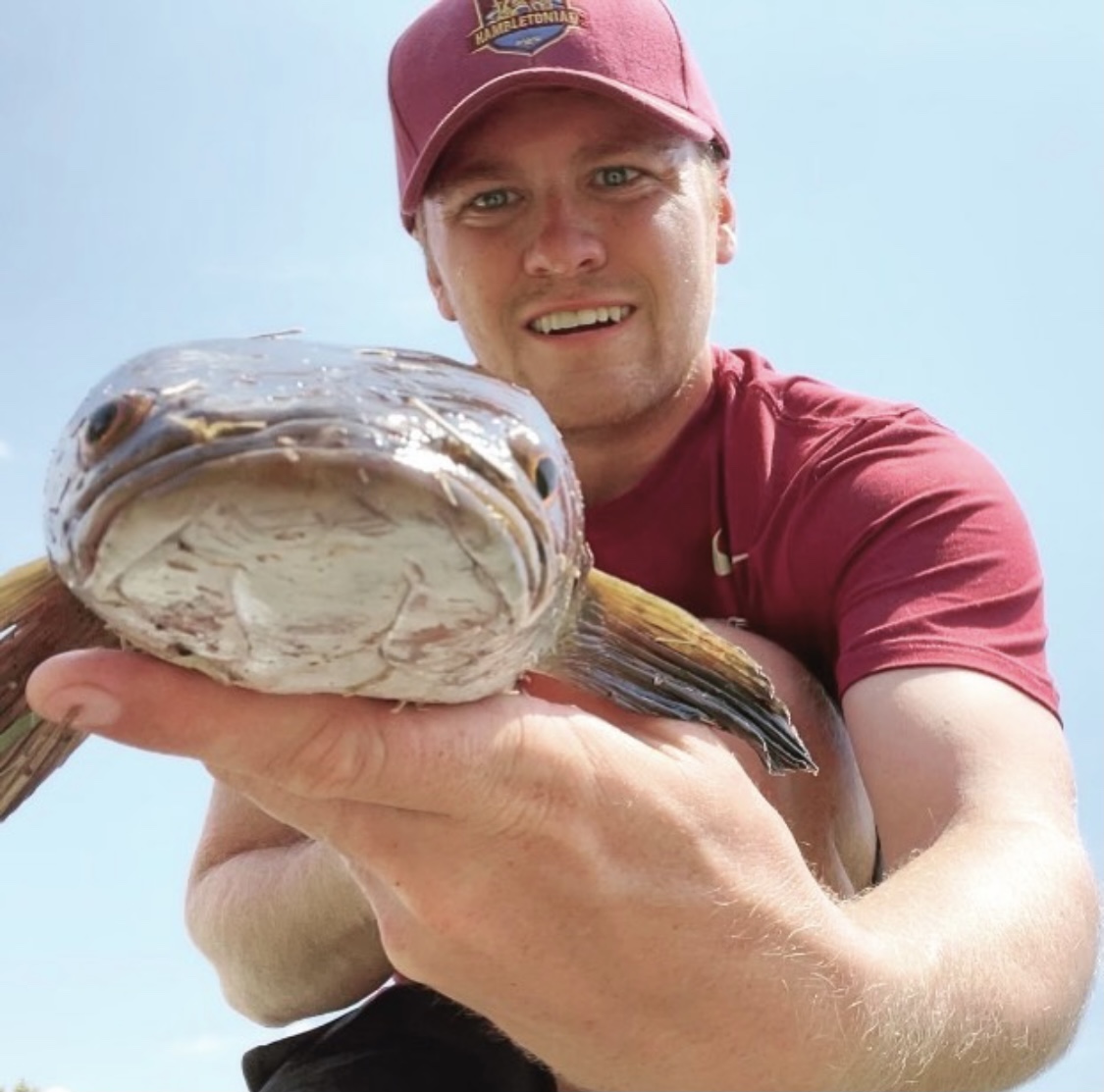
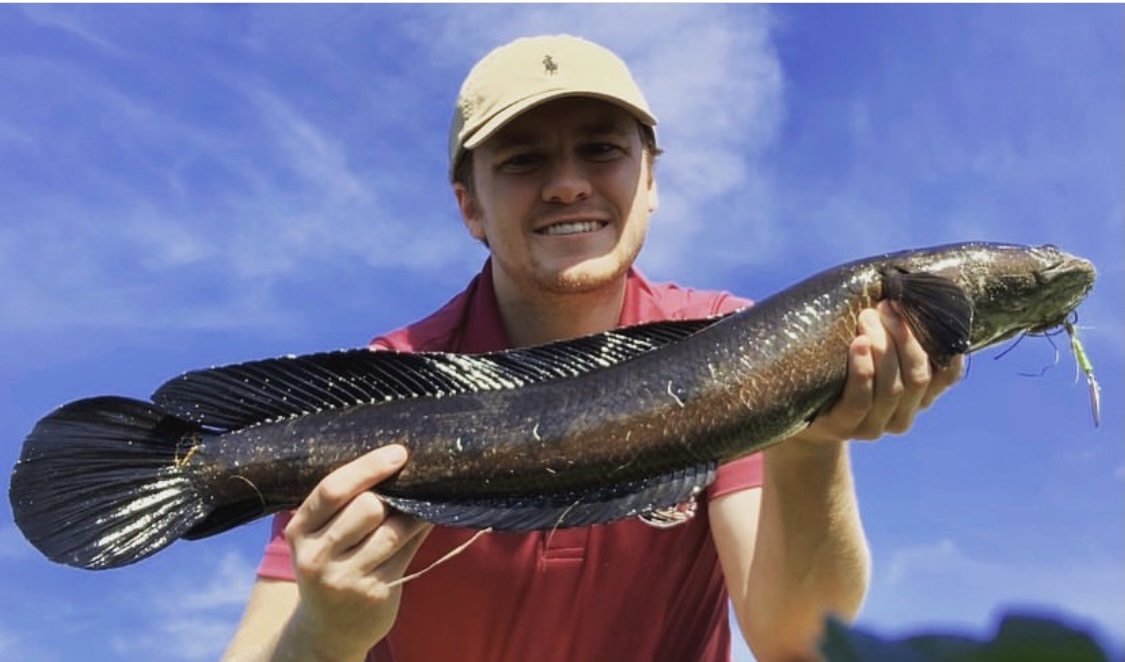
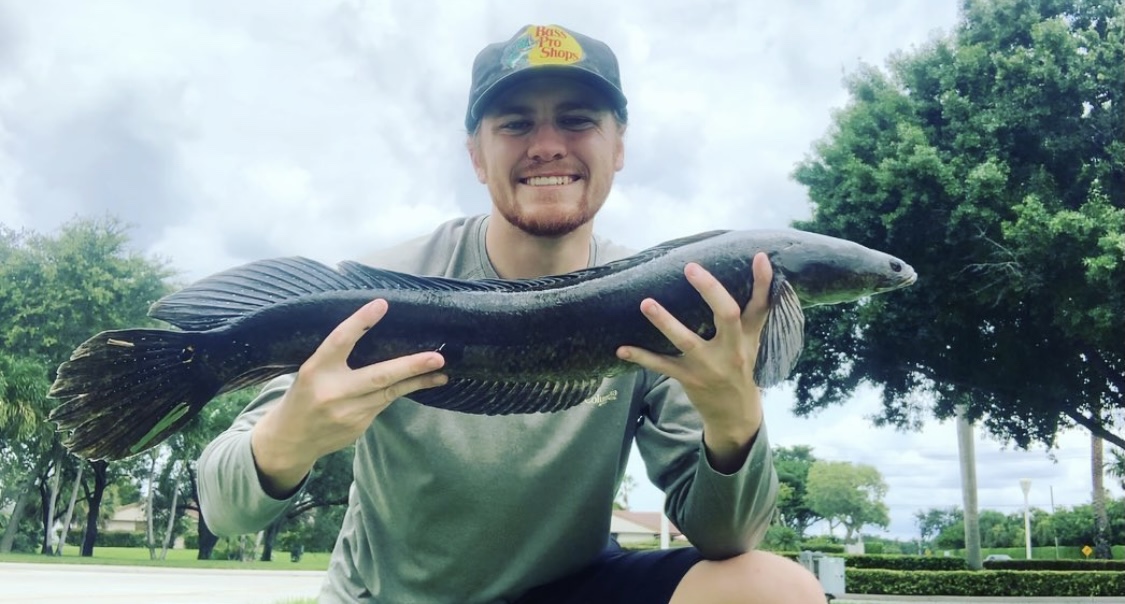
First, if there’s enough clear/weed-less water along the bank or 2-3ft away from the weeds covering the bank, then throwing a 1/4oz or heavier in-line spinner is my first move. I tend to stick to white body lures with silver/nickel blades or black body lures with gold/brass blades, but a functioning blade is the real key to whatever lure you decide to go with. From here I would simply cast the lure to the closest clear path of water parallel with the bank and retrieve it at medium speed. However, if it’s an especially hot day or a body of water with no shade, I slow down the retrieve speed to allow the lure to sit lower in the water.
My second method comes into play when there’s simply not a clear enough path to cast a spinner without dealing with weed-snags, which ultimately ruin the action of that style of lure. This is the perfect type of scenario where having at least one reliable topwater frog lure in your tacklebox pays off. Cast it on the same path as you would the in-line spinner, parallel to the bank, and either on or next to the weeds covering the bank. Here, a quick retrieve or periodically hopping of the lure across the weeds can be rewarded with a surprise explosion from beneath the clumped moss-like weeds. Snakeheads seem more willing to push through thick weeds to grab a potential meal than other species, and amazingly usually manages to grab hold despite the slippery wall of weeds between them and their target.
Jubel’s Insightful Experiences from Pathanamthitta
“Giant Snakehead can either be super shy or super aggressive. I think the main difference for Giant Snakehead and Bullseye Snakehead would be the way we fish for them, from what I have seen, Bullseye Snakehead are extremely aggressive but for Giant Snakehead they can be very shy and spooked extremely easily so usually what we do is to work our lures super slow at first and we slowly speed up the pace to see what the fish wants. We can’t just start out working our lures really quickly since they may get spooked. Usually, we use topwater buzzbaits and walkthedogs for Snakeheads without fry and this works well for them. For snakehead with fry, we mainly use sinking lures like minnows and jerkbaits, or sinking pencils.”
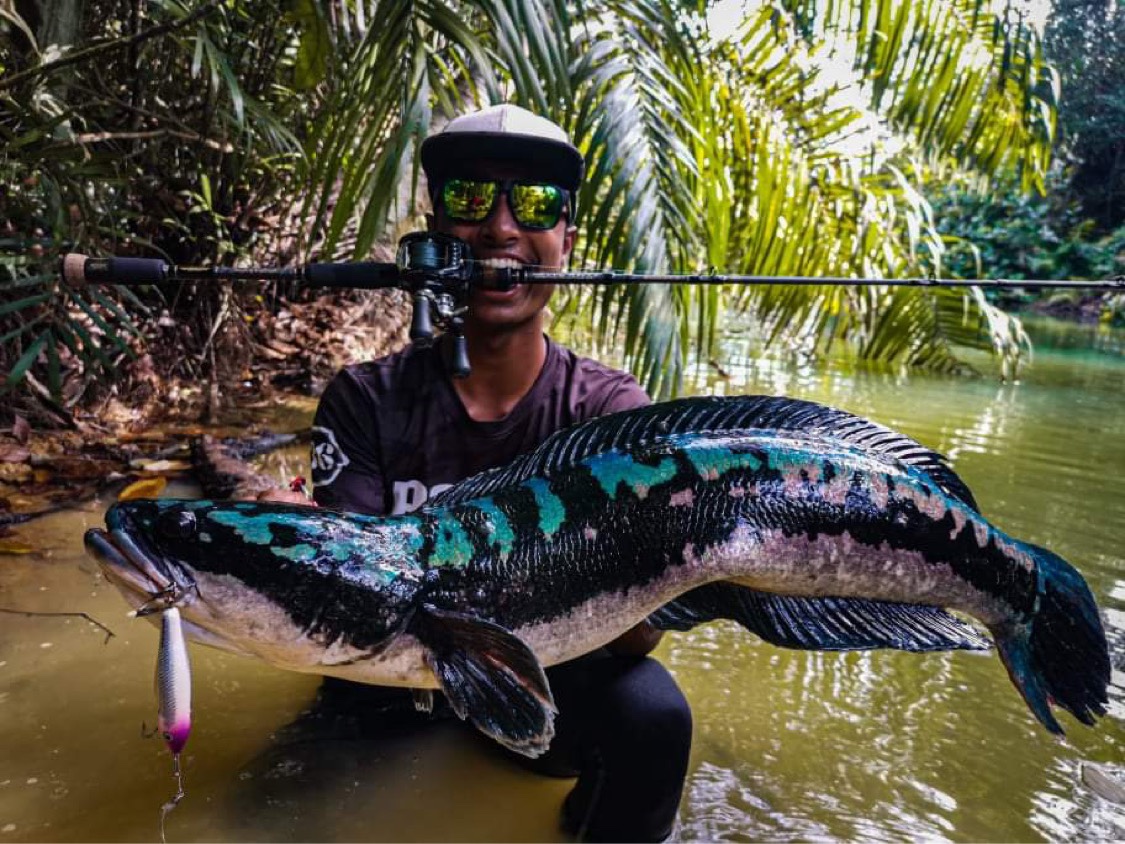
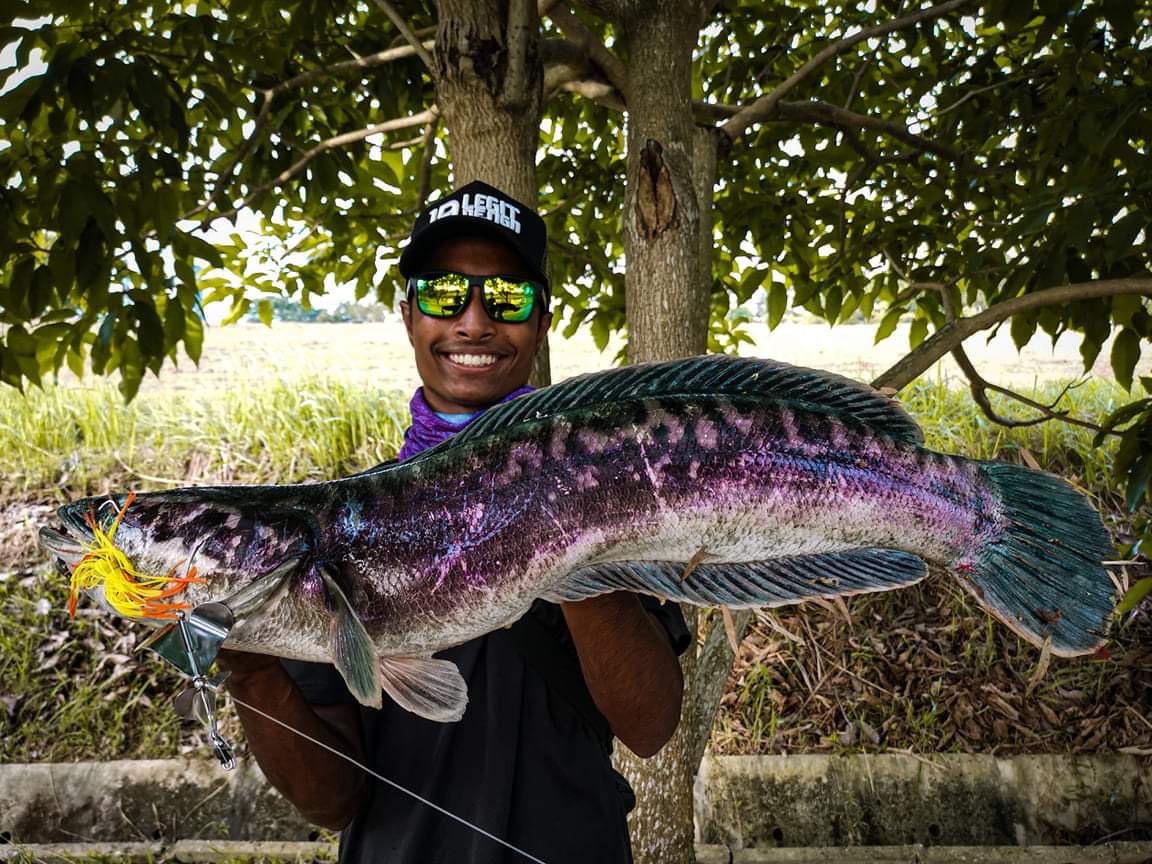
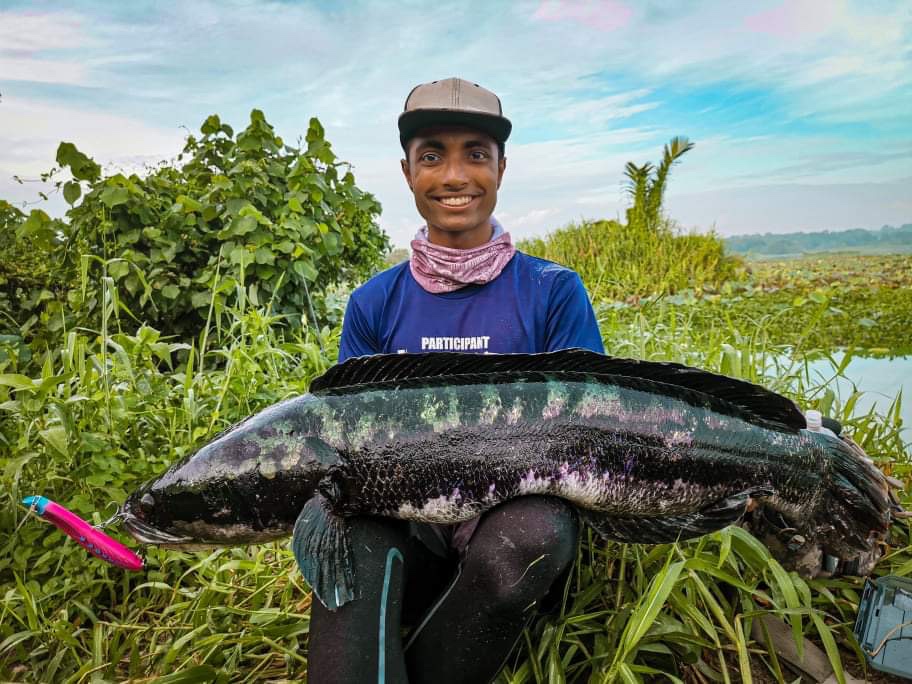
Jubel’s Setup
“Another thing is the setup we use; it is extremely difficult to pierce the hook properly into the fish mouth since they have a very hard mouth, so we need to use super stiff rods like pe 2-4 (20-40lb) and our mainline is usually more than 40lbs and our leader is usually more than 50lb. My go to Giant Snakehead setup is a Rapala Trailblazer Monster Hunt pe 3-6 (30-60lb) paired up with my Zillion HD with 50lb Sufix 832 and 80lb flouro leader, but even with such heavy leader they still can bite through it so we need to use bigger lures to prevent them from cutting us off.”
Special thanks to Jubel Matthew for sharing a word with us on his experiences and allowing us to post pictures of his amazing catches.
 KANE ANTHONY